



Lately, I’ve been on a journey to understand what sustainability means to me, and what I can do to be more eco-friendly. When I first thought about sustainability, I considered what I was putting into my body. Were the veggies I was buying a good choice? Should I have been selecting organic produce instead? What was best for the environment, and what even was a pesticide? You get the drift.
It took me a while to realise that what I was putting on my body, was just as important as what I was putting into it. I’d been worried about organic vs non-organic green beans and had never considered the other ways that chemicals could be entering my bloodstream: through my underwear drawer.
So much of it was dominated by synthetic fabrics, with polyester and nylon promising a silky-smooth feeling.
Natural vs Synthetic Fibres: A Quick Overview
Before we jump into things, let’s touch base on what everything means.
Natural fibres come directly from plants or animals. These include cotton, wool, linen, hemp and silk.
Synthetic fibres are made from petrochemicals. These include polyester, nylon, acrylic, spandex and rayon.
Sustainability, as defined by the United Nations, means “meeting the needs of the present without compromising the ability of future generations to meet their own needs”.
For a long time, that definition overwhelmed me, so for our purposes, let’s break that down into the effect that our choices have on the environment and ourselves. Alright – back to it.
The Impact of Synthetics
“So what? I’ve got a polyester jumper, and it’s just fine! I haven’t had any issues!”
Of course, polyester is all around us. I’ve got plenty of jumpers and shirts made of the stuff. The difference is, when you wear it as underwear, it poses a risk to your health. The skin surrounding your groin is distinct from the skin on the rest of your body. It is incredibly thin and highly vascular, with a significantly higher absorption rate than the rest of your body.
When used for underwear, polyester forms a barrier that lacks breathability and traps body heat and moisture. This creates a warm, humid microclimate, ideal for bacteria and fungi, contact dermatitis, and skin chafing.
Alongside the increased risk of bacterial and yeast infections, the microplastics and chemical treatments present in synthetic undergarments can leach out of the fabric and directly into your bloodstream. If you add body heat, sweat and friction to the synthetic undies, the chemical finishes break away from the polyester fibres. This allows them to be absorbed into your bloodstream, as found in a 2024 study by the University of Birmingham.
The exact effects are still being studied. However, we know that our bodies are absorbing microplastics from a variety of sources, so it makes sense to reduce exposure points where we can. To me, swapping to cotton undies seems like a straightforward choice.
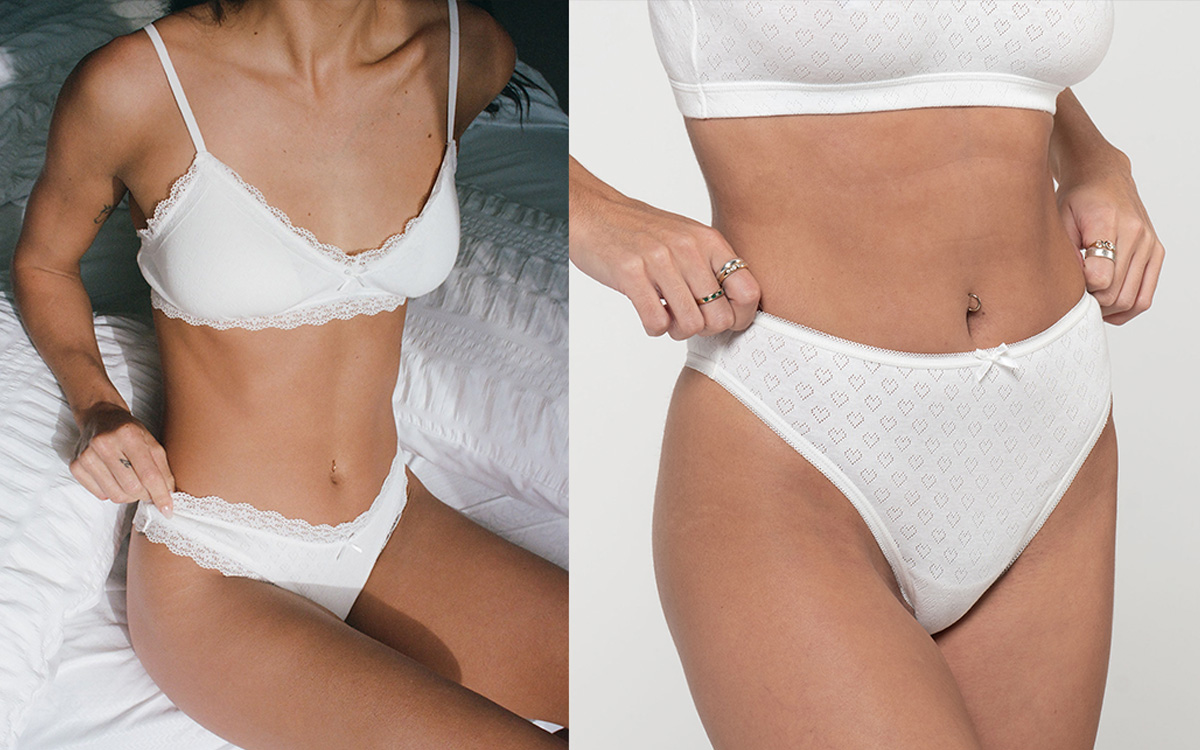
When I was looking at sustainable alternatives, Nat’v Basics stood out to me for a few reasons.
What about the environment?
Remember our earlier definition of sustainability? Well, synthetic underwear impacts the environment just as much as it does your body. When it wears out, it takes up to 200 years to break down. Before that, however, when it’s being washed in your washing machine, it’s shedding microplastics.
A study published in the scientific journal PLOS ONE revealed that a single domestic wash cycle of synthetic clothing can shed anywhere from 8,800 to over 700,000 microplastic fibres into our wastewater. That means that our home laundry is a direct source of microplastic pollution, which flows directly into our rivers and oceans, where microplastics are consumed by marine life.
This affects our marine life, causing entanglement of feeding appendages, gut blockage and malnutrition in zooplankton or lower levels of the food web. It also means that when we consume marine life, like fish, we are also consuming microplastics.
That being said, Food Standards Australia New Zealand (FSANZ) released a statement saying that “human exposure to microplastics from eating finfish is likely to be negligible. This is because the microplastics are found in the gills, liver and intestines of the finfish, which are organs that are not typically eaten.”
Further research is still being carried out on the issue.
So, what are our alternatives?
The best way to look after your health, and the environment, is to choose cotton (or other natural alternatives). It’s an easy choice to make, with a great payoff for your body and the environment.
Cotton possesses natural, moisture regulating properties. It keeps the skin dry and discourages bacterial growth. It breaks down much faster: taking up to 12 weeks to break down.
Of course, most cotton underwear is not 100% cotton. It is usually 90-95% cotton, with 5% elastane. This gives the fabric its stretch and allows it to be washed repeatedly.
Best of all, it won’t shed microplastics into our oceans.
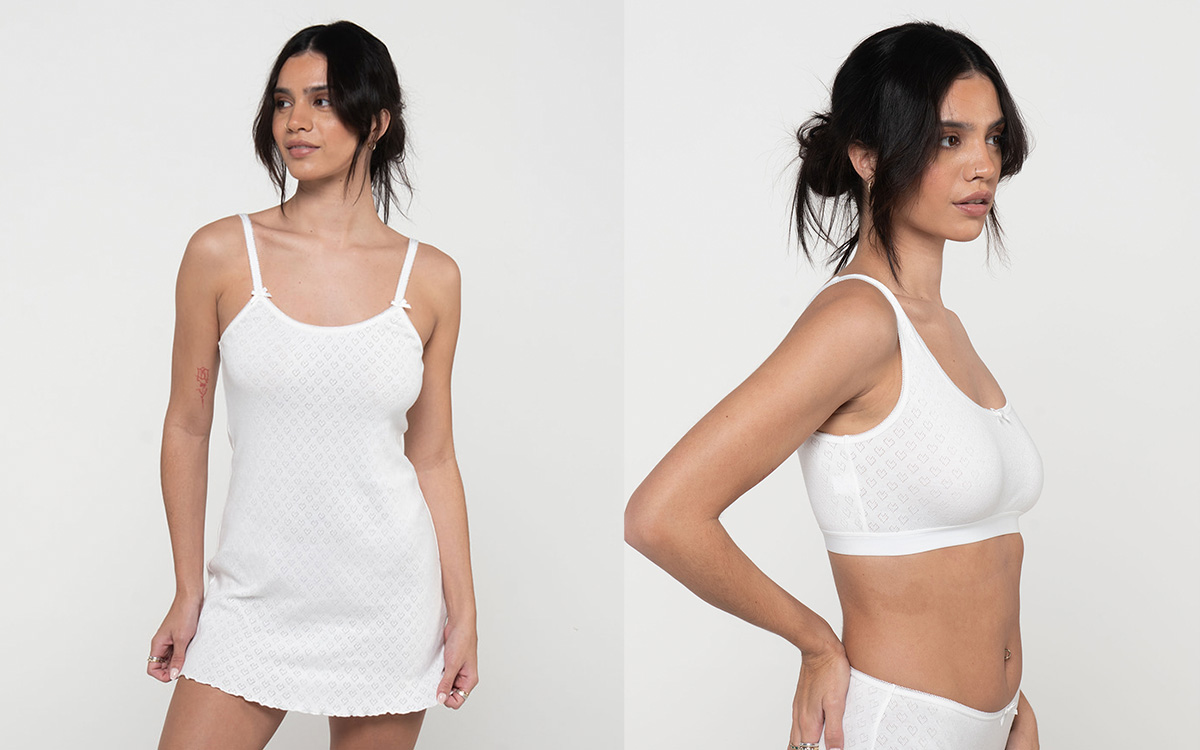
Sustainable alternatives by Nat’v Basics
Choosing Sustainable
When I was looking at sustainable alternatives, Nat’v Basics stood out to me for a few reasons.
I appreciated their diversity in models and felt that they represented a variety of body types and personal styles. I like that they specially say that their apparel is “designed by women, for women and non-binary people”. When I browsed their website, that felt clear to me.
I also appreciated how upfront they were about their ethos and sustainability certifications, as well as their supply chain. They clearly outline that they “use suppliers that strictly comply with environmental protection laws and regulations, as demonstrated by third-party international auditors”.
Their packaging is compostable, their shipping is carbon neutral, and they are very clear about the materials that they use. They’ve got a range of options to choose from, not just limited to undies. Think: crops and bralettes, and a fabulous range of colours.
Most importantly, their underwear is incredibly comfortable! I wore their tops and bottoms, as well as their nighty, during the week, and it felt so much better than the synthetic alternatives I’d gotten used to wearing. I hadn’t realised underwear could be that comfortable. It was well-designed and beautiful: I loved the hearts on the nightie and briefs. When I was wearing it, I felt that I was wearing something high-quality.
I loved wearing it and it was an easy substitution to make. I didn’t feel like I had to give anything up or make a big sacrifice to choose sustainable underwear. It felt like an easy choice with a big payoff.
At the end of the day, we don’t have to accept plastic underwear as the norm. On my journey to improving my sustainability practices, I will only be choosing cotton from now on. It’s time to clear out the plastic and choose pieces that will love my body (and the environment) back.


