


In 2017, photographer Jane Duong and producer Victoria Firth-Smith created Queerberra to document the lives of Canberra’s LGBTQIA+ community during one of the most emotionally charged moments in Australian queer history—the national postal vote on marriage equality.
As love became a national battleground, queer Canberrans turned to one another. Over weekends spent in bedrooms, workplaces, and on the streets, Duong and Firth-Smith captured portraits of pride, exhaustion, defiance, love, and hope.
Eight years on, the Canberra Museum and Gallery (CMAG) has revisited Queerberra in a new exhibition that reflects on what has changed since the passing of the Marriage Equality Act and honours the LGBTQIA+ community’s ongoing fight for equality, recognition, and love.
We chatted to Jane and Victoria about their photograhic work and their new exhibition showing at the Canberra Museum and Gallery (CMAG).
FUSE: What originally compelled you both to begin QUEERBERRA?
Jane Duong and Victoria: QUEERBERRA began in 2015 when our friend Jenny Atkinson suggested we photograph dapper queers in the ACT. Jane came home excited, and the three of us began what became an exhibition of thirty portraits at Front Café and Gallery titled Queer ACT. Two years later, during the marriage equality plebiscite, community members urged us to return to the project. Instead of just re-showing the original thirty, we decided to expand it to one hundred portraits. It became a way to ask for, and amplify, queer brilliance during a difficult time.
How many people did you photograph, and did you include them all in this exhibition?
We took 100 portraits of individuals, couples, friends, and families. The entire project lives in the book, which is available for purchase.
How long did the project take, and were there obstacles?
The 2017 QUEERBERRA project took roughly a year to complete. The major obstacle was homophobia; some people withdrew or did not feel safe to participate. It was also an emotionally intense period for the community and us, as we were working full-time while doing the project as a labour of love. Even so, it remained joyful; the difficulty was the context, not the people.
Why show these images again after eight years?
CMAG approached us to revisit QUEERBERRA in partnership with the exhibition LOVING: A Photographic History of Men in Love, 1850–1950. It felt like the right moment to honour what the portraits captured and reunite as creative collaborators.
Were you surprised Canberra voted yes with such overwhelming support?
Looking back, it feels obvious; at the time, it absolutely was not. We were hopeful but deeply uncertain. Even as the yes was announced, there was fear about whether it would truly become a legal change. It was an emotionally charged day, marking both celebration and the beginning of the next fight for trans rights and broader queer liberation.
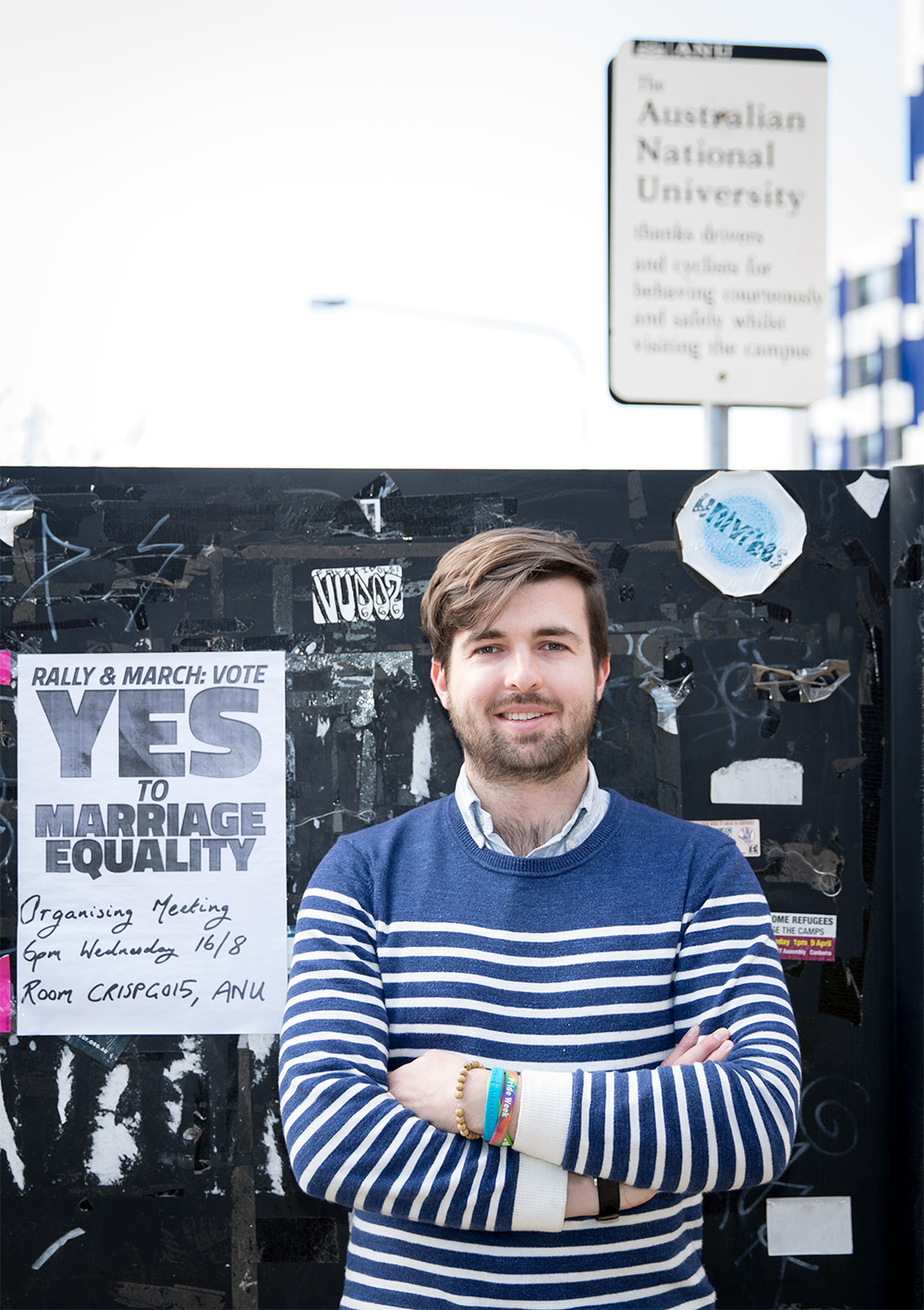
Queerberra James Australian National University 2017. Created by Jane Duong and producer Victoria Firth-Smith.
When revisiting the collection, were there sessions or stories that stayed with you?
More than individual portraits, it is the feeling of time passing. Some people have died. Some have transitioned. Relationships have changed. And we look impossibly young. We feel waves of nostalgia and tenderness, a reminder that these images now hold personal histories and stories of strength that still awe us.
How did you choose your subjects, and how did you decide how to photograph them?
The first thirty portraits were of people we approached. After that, word spread, more people joined, and we actively sought representation where we noticed gaps. We were not chasing icons or well-known activists; we wanted a democratic cross-section of queer life. We asked everyone to come exactly as they are and to choose a place in Canberra that held meaning for them. That is why the project's geography feels so honest and intimate.
Since 2017, what challenges or victories have you witnessed, and why does visibility still matter?
There have been real gains, including the ACT’s work on banning conversion practices and broader institutional attention to safety and inclusion. But Canberra is not universally safe. We have lost queer and trans community members to violence and self-harm. Venues have closed, and the city’s queer infrastructure feels increasingly fragile. Visibility matters because safety is not a finished project; it is something we continually remake together.
What advice would you give queer artists and photographers documenting transformative moments today?
Do it. Document your life, your friends and your community, take self-portraits. Queer life is a queer archive. Every image is a love letter, a testimony and a record of survival. Create from your own story, but also include others. Be courageous, curious and generous with how you witness each other.
Looking back at your images, does anything feel different about the community today?
There is a stronger sense of connection now. People tell us that when they first appeared in QUEERBERRA, they did not know many others, and now, flicking through the book, they recognise almost everyone. It feels like a constellation that has grown brighter over time. There is pride, belonging and a sense of queer Canberra as a village.
As a time capsule, what do you hope viewers feel when seeing these portraits eight years later?
Life, love and change happen gradually. When you look back eight years later, the jump feels huge; the faces younger, the fashion different, the city changed. But living it was breath by breath. We hope viewers feel pride in what we have survived, softness for who we were and recognition of the work still ahead. These images remind us how precious queer life is; fragile, brave, ordinary and extraordinary all at once.
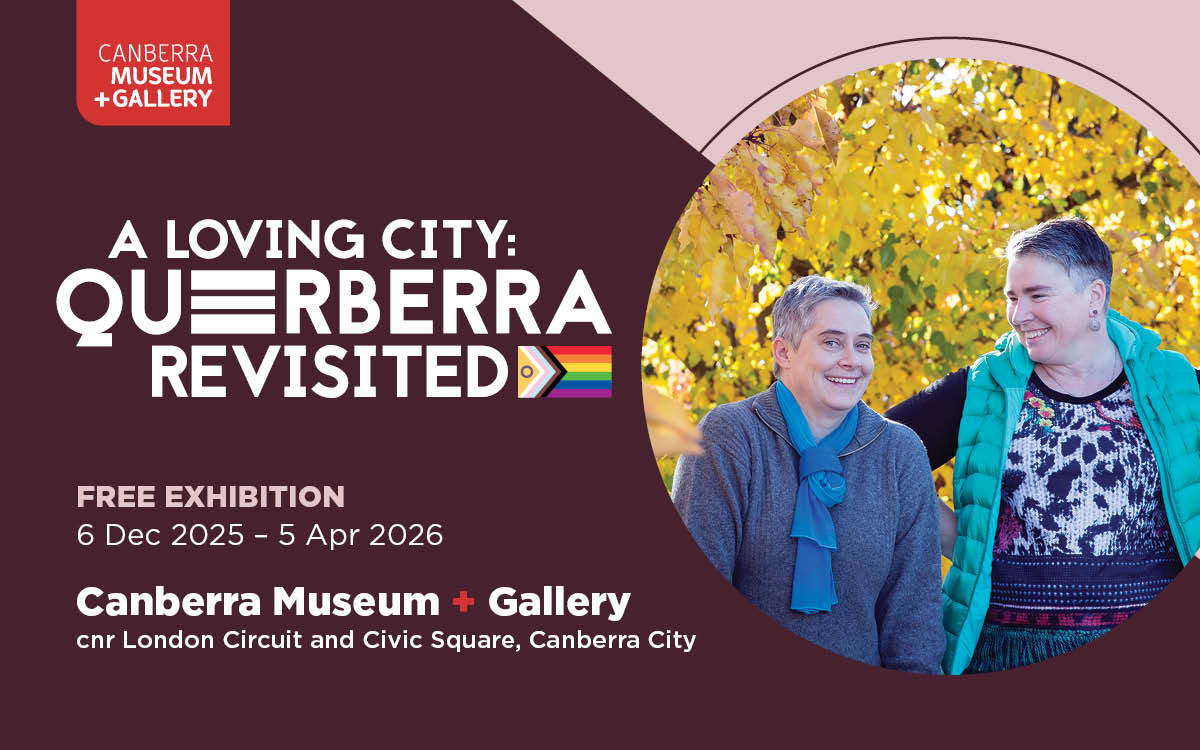
A Loving City: Queerberra Revisited is showing at the Canberra Museum and Gallery (CMAG) from 6 December 2025 until 5 April 2026.
Canberra Museum and Gallery (CMAG)
Cnr London Circuit and City Square, Canberra City
Open 7 days a week:
Monday - Friday: 10am - 4pm
Saturday - Sunday: 12pm - 4pm
The CMAG cafe operates, 8.30am – 3pm Monday to Friday, 12-4pm Saturdays serving drinks and light snacks. Public holidays. Closed some Public Holidays, please refer to this website or phone for information.
Canberra Museum and Gallery is conveniently located close to both parking and public transport options. The City bus interchange is located 200m walk from CMAG on East Row, and many routes also stop along London Circuit. Details of bus services can be found on the ACTION website, or by phoning 13 17 10.


